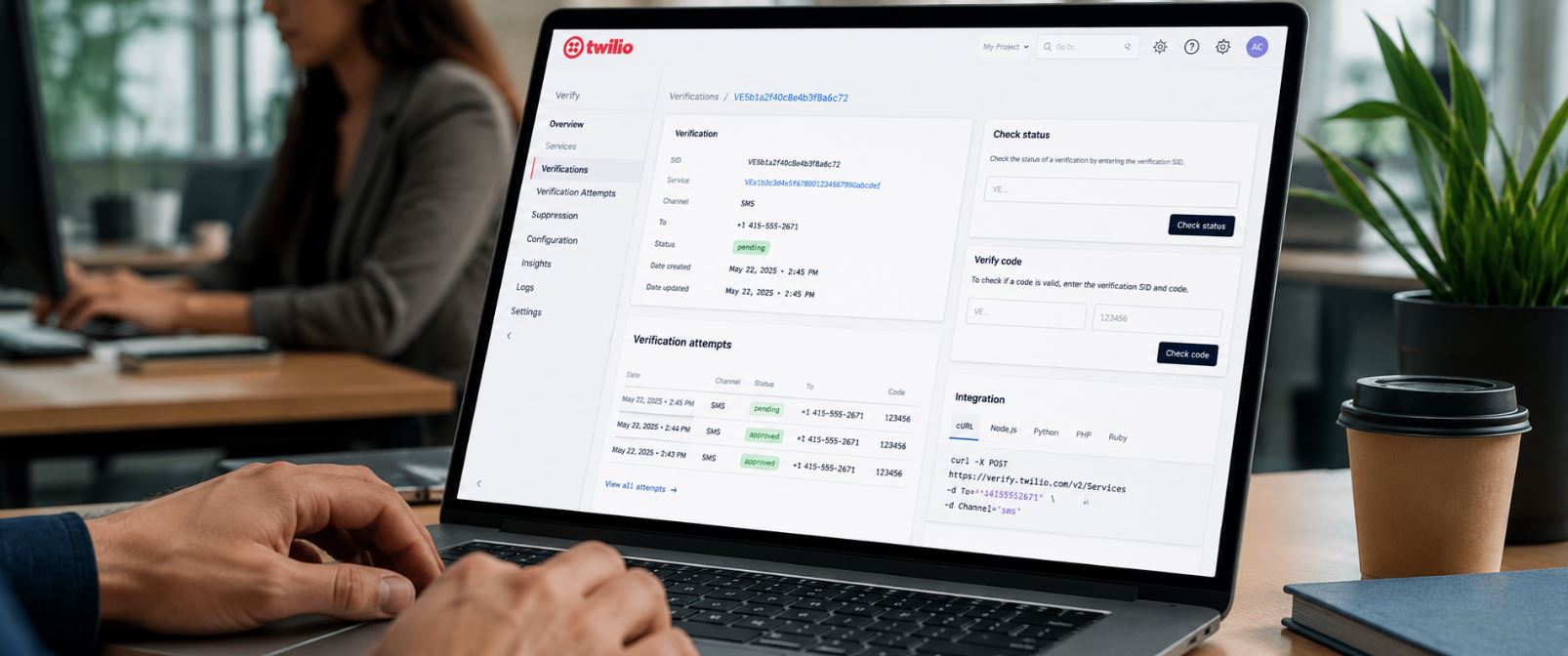
What is QA OTP by country with mobile IPs
QA OTP by country with mobile IPs is not a way to bypass anti-fraud systems or create accounts at scale. In a normal product team, it is a method for checking how a real user completes registration, login or action confirmation with a one-time code in a specific country, from a specific mobile network and under typical mobile conditions.
An OTP flow looks simple: the user enters a phone number, the service sends a code, the user enters the code, and the account is verified. In practice, this is where onboarding often breaks. SMS may arrive late, voice fallback may start too early, WhatsApp may not be available in a country or may not appear in the UI, the code page may hang because of CDN or WAF rules, and anti-fraud logic may block normal users by mistake.
That is why OTP testing should not be done only from office Wi-Fi and a single test number. If a product works in Ukraine, Poland, Romania, Moldova, Germany or Kazakhstan, the team needs to see the difference between countries, operators, delivery channels and the real time needed to complete registration.
How OTP flows work in Twilio Verify and Vonage Verify
Most verification systems follow the same basic logic. The user submits a phone number, the backend creates a verification request with the provider, the provider generates a code and delivers it through the selected channel. The user then enters the code, and the application checks it through the provider API.
Twilio Verify is commonly used with SMS, voice, WhatsApp and other channels, depending on the product and setup. For Twilio Verify QA, the team should test not only whether the code is delivered, but the full path: phone number validation, E.164 format, resend logic, timers, error messages, blocking after repeated attempts and proper masking of the phone number in the interface.
Vonage Verify can also be used to build verification workflows. For example, older Verify v1 workflows can combine SMS and TTS voice calls: first an SMS, then a voice call if the user has not completed verification. Newer workflows can use SMS, Voice, Email, WhatsApp and custom workflow logic.
Why mobile IPs are useful for QA, not for bypassing
Mobile proxies in this context are used to reproduce a real user environment. A user does not always open a website or app from a datacenter connection. They often use a phone, a mobile operator, a changing IP, different DNS, a different route to a CDN and unstable latency. These conditions can affect onboarding.
The correct approach is simple: the tester does not impersonate users, does not create fake registrations and does not try to bypass anti-fraud controls. The tester checks whether a legitimate user is blocked in a certain country, whether redirects fail, whether the OTP page loads slowly and whether fallback channels work as expected.
For a product team, mobile IPs are useful when it is necessary to reproduce the user path from a specific country: from opening the landing page to entering the OTP. This is especially important for fintech, marketplaces, SaaS, mobile apps, delivery services, travel products and any service where registration directly affects conversion.
Where SMS onboarding QA usually breaks
SMS onboarding QA should test more than “the code arrived or not”. Often the issue is not the SMS itself, but a group of small problems that the user experiences as one failed flow.
- Incorrect phone number validation. The form rejects local formats, inserts the wrong country code or removes the first digit.
- Over-aggressive retry logic. The user clicks “send again”, and the system creates several verification requests and hits rate limits.
- Wrong timer behavior. The UI says the user can request a new code after 30 seconds, but the backend still does not allow it.
- Delivery delay. The SMS arrives after 60–120 seconds, but the user has already left the page or requested a new code.
- Fallback starts at the wrong time. Voice or WhatsApp starts too early, too late or does not start in the required country.
- CDN or WAF blocks part of mobile traffic. The user sees an error, an endless loader or a security check redirect.
- Weak analytics. The team sees only “verification failed” but cannot see the step where the flow broke.
Rate limits: what should be tested carefully
Rate limits are not an obstacle. They are part of a safe OTP architecture. They protect users from spam, the business from unnecessary cost and providers from SMS pumping and toll fraud. During OTP testing, the goal is not to push the system until it breaks. The goal is to check whether limits work clearly and predictably.
Twilio recommends using retry buffers and avoiding frequent repeated requests to the same number. In practice, the team should check whether the UI explains when the user can request a new code, whether the backend is synchronized with the frontend timer and whether page refreshes create extra verification requests.
It is also important to test the product's own limits: by IP, session ID, phone number, phone number country, IP geolocation, user agent and combinations of these signals. A real user may have a Ukrainian number, be located in Poland, use a mobile IP and switch networks several times within one session.
Fallback channels: SMS, voice and WhatsApp
Fallback is not meant to force delivery at any cost. It gives a legitimate user a second path when the main channel fails. The logic can differ by country: in some markets SMS is cheap and stable, in others WhatsApp works better, and in others voice is useful only as a backup.
| Channel | What to test | Common risks | When useful |
|---|---|---|---|
| SMS | Delivery, delay, sender ID, local phone format | Delays, A2P blocking, cost, SMS pumping | Basic onboarding, broad compatibility |
| Voice / TTS | Start time, language, code clarity, repeats | User does not expect a call, local blocking, cost | Backup when SMS fails |
| Country availability, template, brand, SMS fallback | Approved templates are needed, not all users have WhatsApp | Markets with high WhatsApp usage | |
| Email / TOTP / Push | Account recovery and later authentication | Does not replace phone verification in every case | Recovery and 2FA after registration |
Geo registration testing: how to build a test matrix
Geo registration testing should start not with many numbers, but with a clear matrix. The team should define countries, operators, phone number type, OTP channel, expected delivery time and success criteria. This makes it easier to understand where the problem is: provider, local operator, frontend, backend, CDN or anti-fraud logic.
| Scenario | What to record | Why it matters |
|---|---|---|
| UA number + UA mobile IP | Time to SMS, API status, time to code entry | Baseline local onboarding |
| UA number + PL mobile IP | Whether anti-fraud blocks geo mismatch | Users abroad |
| RO number + RO mobile IP | Local format, language, sender ID | Testing a new country |
| MD number + MD mobile IP | Routing, delay, resend behavior | Smaller market with separate operators |
| DE number + DE mobile IP | Compliance, A2P, delivery and fallback | Market with stricter rules |
For every scenario, the team should record timestamps: page opened, “get code” clicked, API response, actual message received, code entered and verification completed. Without this data, Twilio Verify QA or testing through Vonage Verify becomes a subjective “it seems to work”.
Case: a team tests onboarding in several countries
Imagine a product team launching a service in five countries. Analytics show that registrations from Ukraine work well, while Romania and Moldova drop at the OTP step. At first, the issue looks like SMS delivery. After proper QA, the picture may be different.
Testers go through the flow from local mobile IPs, use controlled phone numbers, do not make mass requests and record only allowed scenarios. They find that in one country SMS arrives after 90 seconds, while the UI allows a resend after 30 seconds. In another country, the CDN sometimes shows a security check on the code entry page. In a third country, voice fallback starts after the user has already closed the tab.
The team does not try to “spin OTP”. It fixes the product: increases the timer, adds a clear message that the code may take up to two minutes, adjusts rate limits, improves logging, checks WAF rules for mobile networks and creates a separate fallback strategy for countries where SMS is often delayed.
Which metrics should be collected
For QA OTP by country with mobile IPs to be useful, screenshots saying “the code arrived” are not enough. The minimum set of metrics should include:
- country of phone number;
- country of IP and network type: mobile, Wi-Fi, datacenter;
- operator or ASN, where available;
- channel: SMS, voice, WhatsApp, email, push;
- time from click to API response;
- time from click to actual OTP receipt;
- time to successful verification;
- number of resend attempts;
- API error code or internal status;
- the step where the user left onboarding.
This data helps separate delivery problems from interface problems. If an SMS arrives in 40 seconds but users leave after 20 seconds, the provider is not the only issue. If the API responds quickly but the OTP page loads slowly from mobile IPs, the team should check CDN, JavaScript, WAF and frontend performance.
How to test correctly without abuse
Correct OTP testing is built around permitted numbers, controlled scenarios and transparent analytics. Random numbers, disposable SIMs, other people's accounts and mass registration attempts should not be used. They damage metrics, increase the risk of blocking and may create legal issues.
- Use only numbers you are allowed to send OTP messages to.
- Define countries, operators and channels before testing.
- Do not exceed retry rules or try to force rate limits.
- Separate staging, production smoke tests and real customer flows.
- Log technical statuses, but do not store OTP codes in plain text.
- Mask phone numbers in logs and UI.
- Test negative scenarios: wrong code, expired code, resend, IP change during a session.
- Do not use mobile proxies to create fake accounts or bypass anti-fraud systems.
Conclusion
Mobile IPs in QA OTP are a tool for reproducing a real user path. They help the team see how onboarding behaves in different countries, mobile networks and delivery channels. But the value is not in the IP itself. The value is in the method: controlled numbers, a country matrix, timestamps, rate limits, fallback logic and honest analytics.
When a team performs SMS onboarding QA systematically, it finds weak points faster: a wrong timer, delayed SMS, poor fallback, a CDN block or overly aggressive anti-fraud logic. This is how geo registration testing helps improve registration for real users instead of bypassing rules.